You can’t pay your bills. Now what?
The electric bill or the car payment. Groceries or the prescription. When you are deciding which bill not to pay, you need more than budgeting tips. You need a way to decide what to protect first, what can wait, and who can help, this month and every month after.
paycheck ≠ cost of living
If this is your life right now, you are not alone, and you are not doing it wrong.
“I can’t afford groceries this week.”
Find food you can get today, apply for help without waiting until the cupboard is empty, and stretch what you have without assuming a full kitchen or a car.
Food Right Now · Food Stretch System
“Gas is eating my paycheck.”
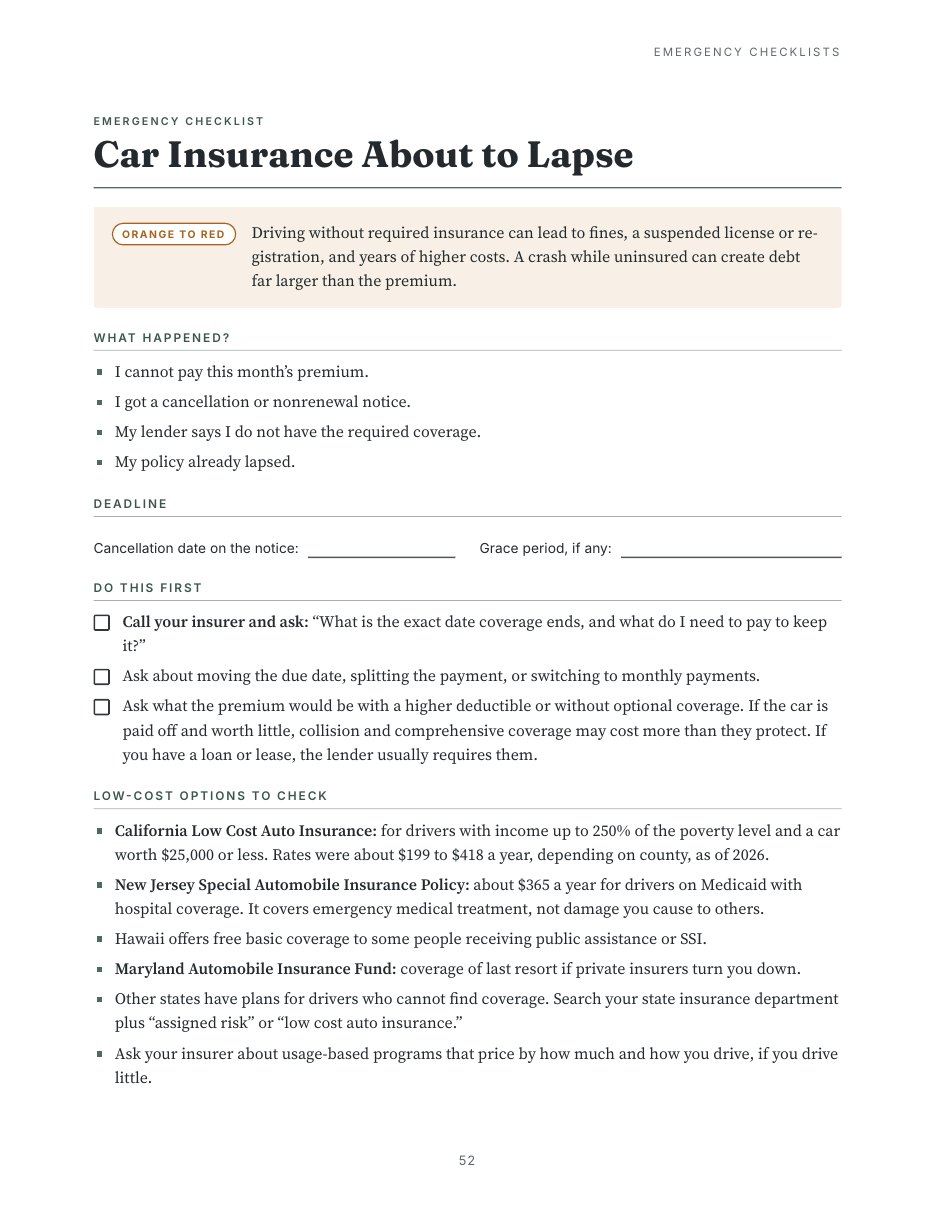
Reduced transit fares, commuter benefits, car repair help, and what to do before your car insurance lapses. No one is going to tell you to just walk.
Transportation · Car Insurance checklist
“I’m losing my health insurance, or I can’t afford it anymore.”
The extra federal help that kept Marketplace premiums lower ended after 2025. Learn what changed, when you can switch plans, and how to lower medical bills you already have.
Healthcare · Medicare & Disability · Medical bill scripts
“My credit card interest keeps climbing.”
Word-for-word scripts to ask for a lower rate or a hardship plan, plus the true cost of payday loans, cash-advance apps, and buy-now-pay-later before you lean on them.
Bill-Negotiation Scripts · Expensive Money
“A shutoff, eviction, or collection notice just arrived.”
Find the real deadline, the minimum action that buys time, and who can help. Step-by-step checklists for the moments that cannot wait.
Emergency Checklists
“I make too much for help, and it still doesn’t add up.”
Hardship programs, hospital financial assistance, employer benefits, and community help that do not depend on being poor enough.
When You Make Too Much to Qualify
This won’t be over by next month. The workbook isn’t built like it will be.
Most money advice assumes one bad month and a quick recovery. When the gap shows up month after month, you need a system you can come back to every time the money runs short, not a plan you have to get perfect once.
Decide what to protect
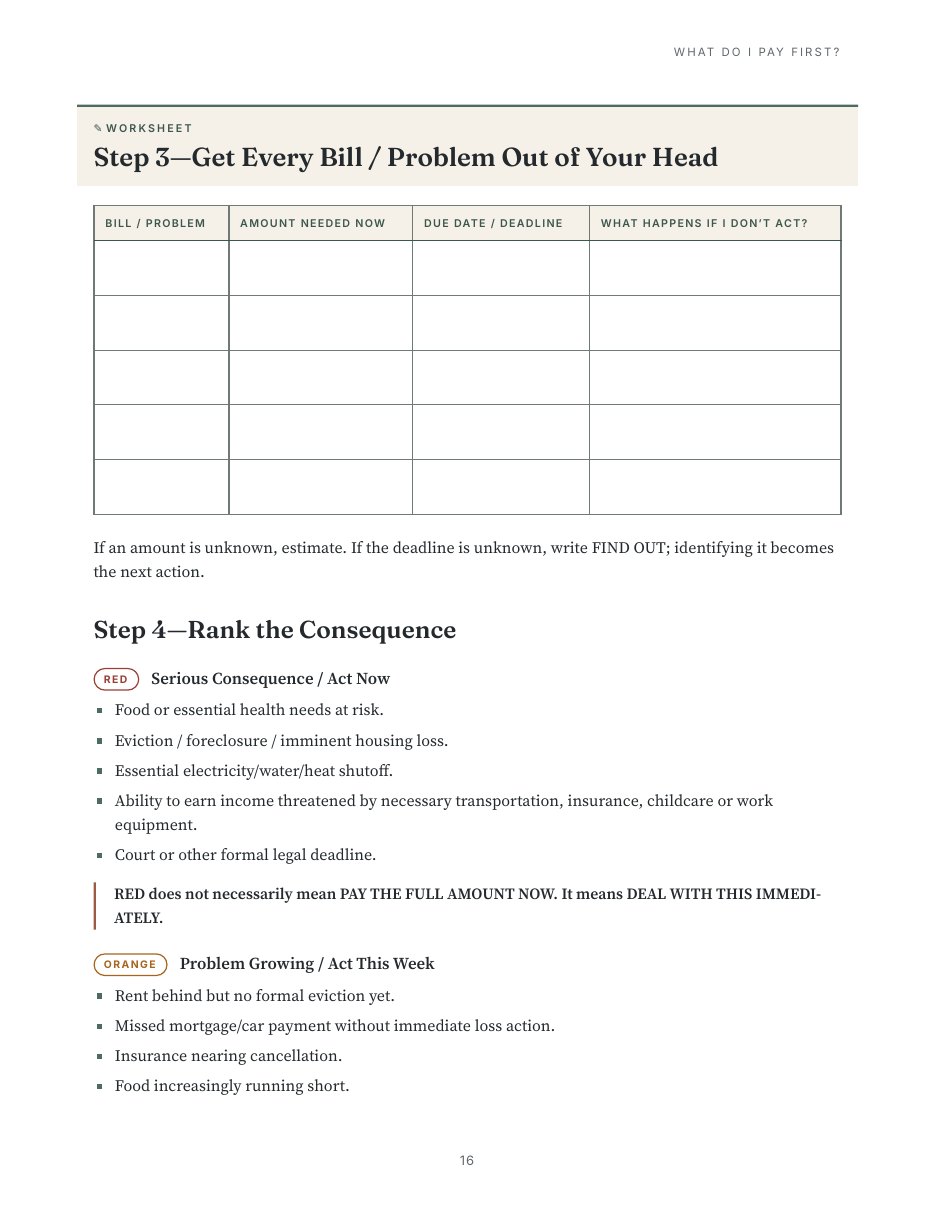
Rank every bill by what happens if it goes unpaid: shutoff, eviction, repossession, a court date, or just a late fee. Act on the one that can hurt you first. Act now does not always mean pay now.
Buy time and find money
Call with a script, ask for hardship plans and fee waivers, apply for help before you hit zero, and find value you already have before you borrow at triple-digit rates.
Keep your footing
Benefits, tax credits, health coverage, credit repair, and when bankruptcy may be the right tool. A weekly planner and a Crisis File so each hard month takes less out of you than the last.
Sometimes you do not have a budgeting problem. The math just isn’t mathing.
Prices went up. For a lot of households, the paycheck stopped covering the basics, and help people relied on got smaller or went away. Choosing which bill not to pay is not a personal failure. It is triage. You do not need another person telling you to skip the coffee. You need to know what to protect first, what can wait, who can help, and what to say when you call.
This is not
- A budgeting lecture
- A debt-shaming program
- A list of “just cut back” tips
- Something you have to read cover to cover
This is
- A way to rank bills by consequence, not by who calls most
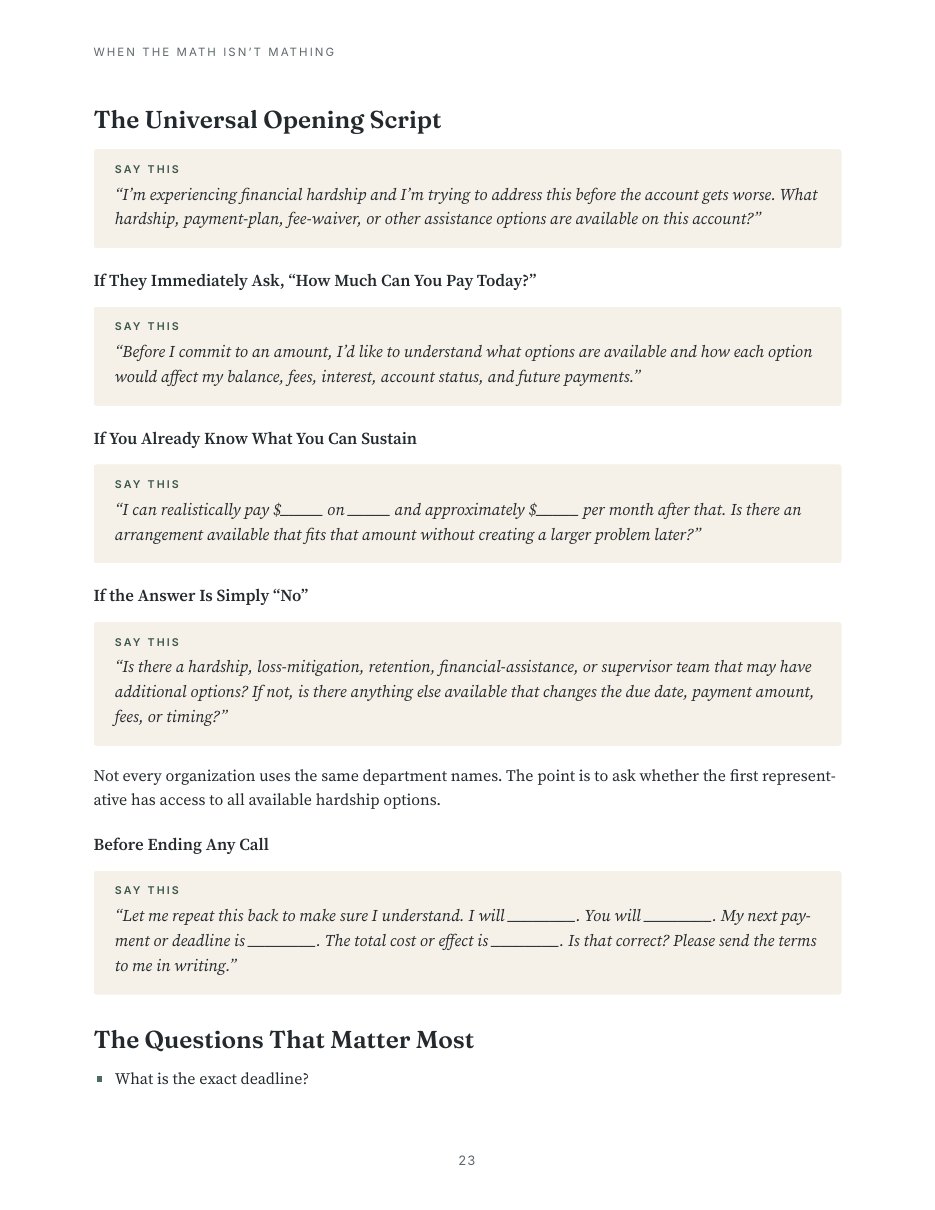
- Word-for-word scripts for hardship calls
- Step-by-step checklists for real emergencies
- Help finding money and resources you may already have
Start with the sentence that sounds like you.
You do not have to be broke, in debt, or in an emergency to use it. Every pathway starts with what is happening right now.
“I literally do not have enough money to pay everything.”
“I can’t afford groceries and gas in the same week.”
“I make too much to qualify for help, but not enough to live.”
“I got a shutoff notice, court papers, or an eviction notice.”
“My health insurance premium just jumped.”
“I’m one car repair away from falling behind.”
Eight parts. Thirty-seven chapters. One next step at a time.
Start Here
What Do I Pay First?, what happens if you don’t pay each bill, a month-after-month routine, and how to talk about money at home.
Make the Call
Scripts for utilities, landlords, lenders, medical bills, insurers, and more.
When It’s Already Serious
Checklists for eviction, foreclosure, repossession, shutoffs, court papers, and garnishment.
Find Money and Stop the Leaks
Hidden money, credit cards when rates are rising, the true cost of payday loans, and bank fees.
Lower the Big Costs
Work benefits, transportation, phone and internet, childcare, kids, pets, and free fun.
Benefits, Taxes, and Health
Benefits, tax credits, free and low-cost health care, insurance premiums, and Medicare help.
Credit, Debt, and Big Changes
Credit report fixes, your rights with debt collectors, bankruptcy basics, and major life changes.
Your Toolkit
The Crisis File, a survival budget, weekly planners, and every worksheet.
Calm pages for a stressful moment.
Financial paralysis is part of the problem, not a personal failing. Every page is built to make the next step smaller.
Urgency levels help you sort what needs action now from what can wait. Red means deal with it now. It does not always mean pay it now.
Every pathway ends with the smallest useful thing to do next. If that is all you can do today, it counts.
The practical things people usually learn too late, like the difference between a scary notice and a final legal order.
“I’m experiencing financial hardship and I’m trying to address this before the account gets worse. What options are available?”
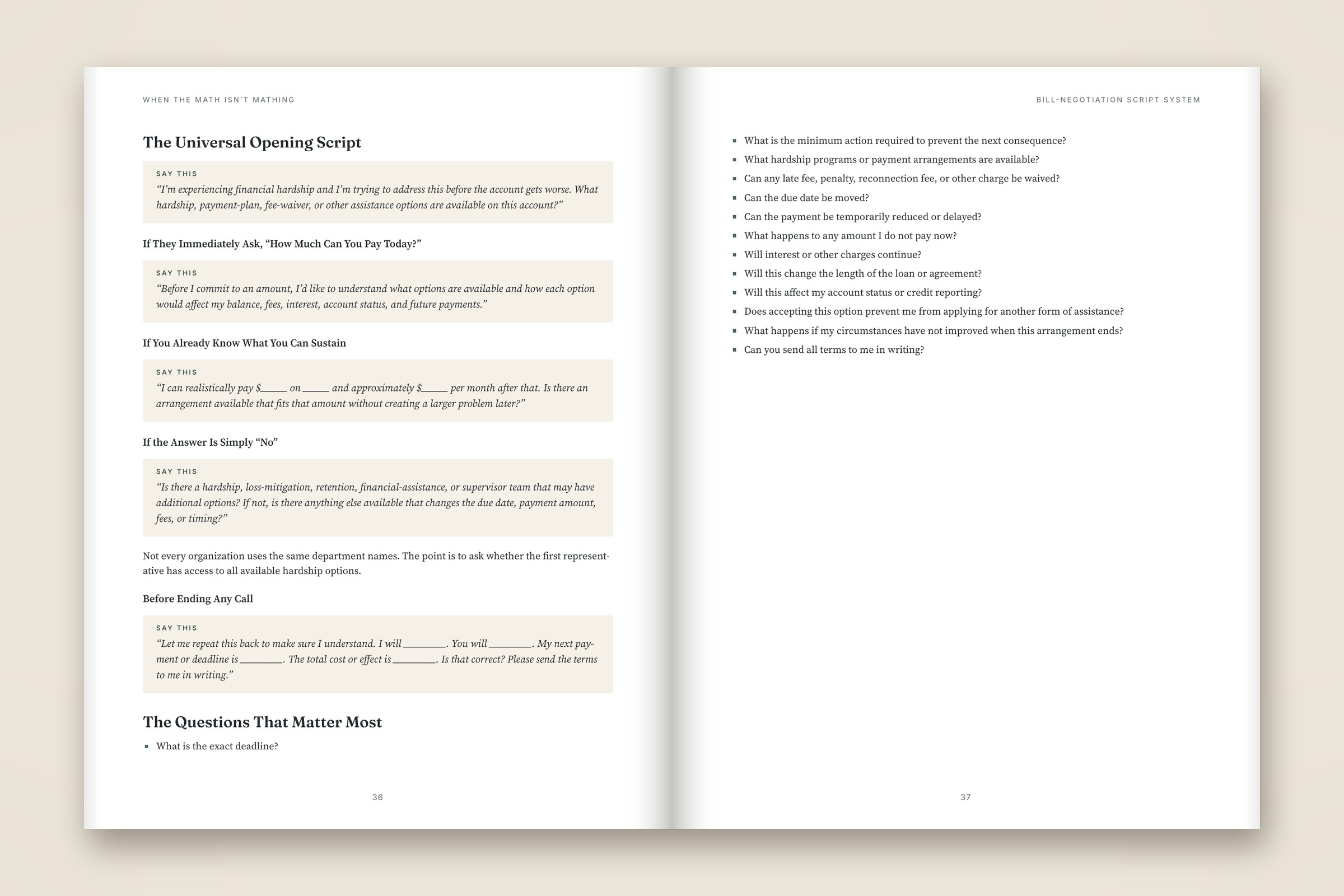
A few of the 193 pages.
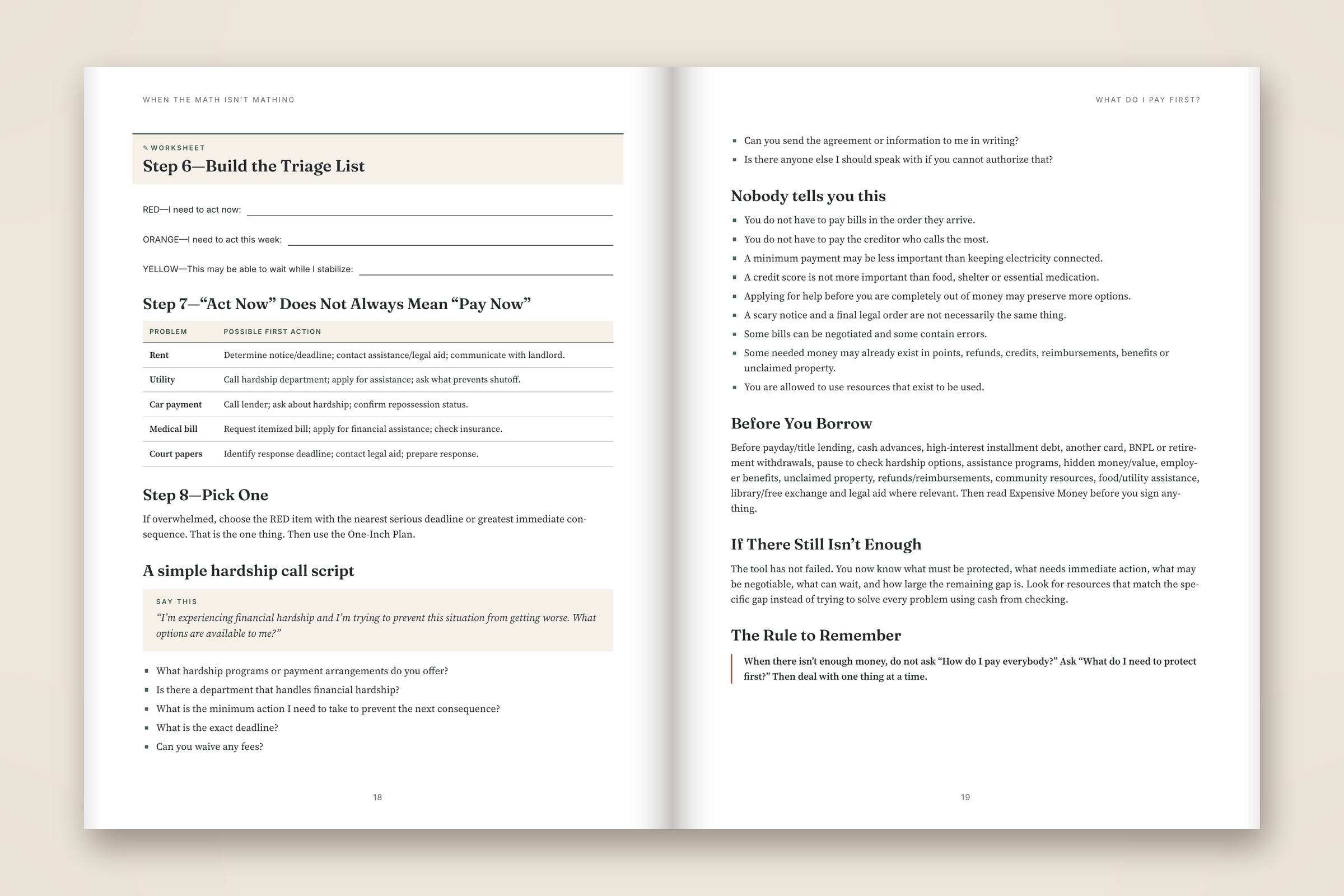
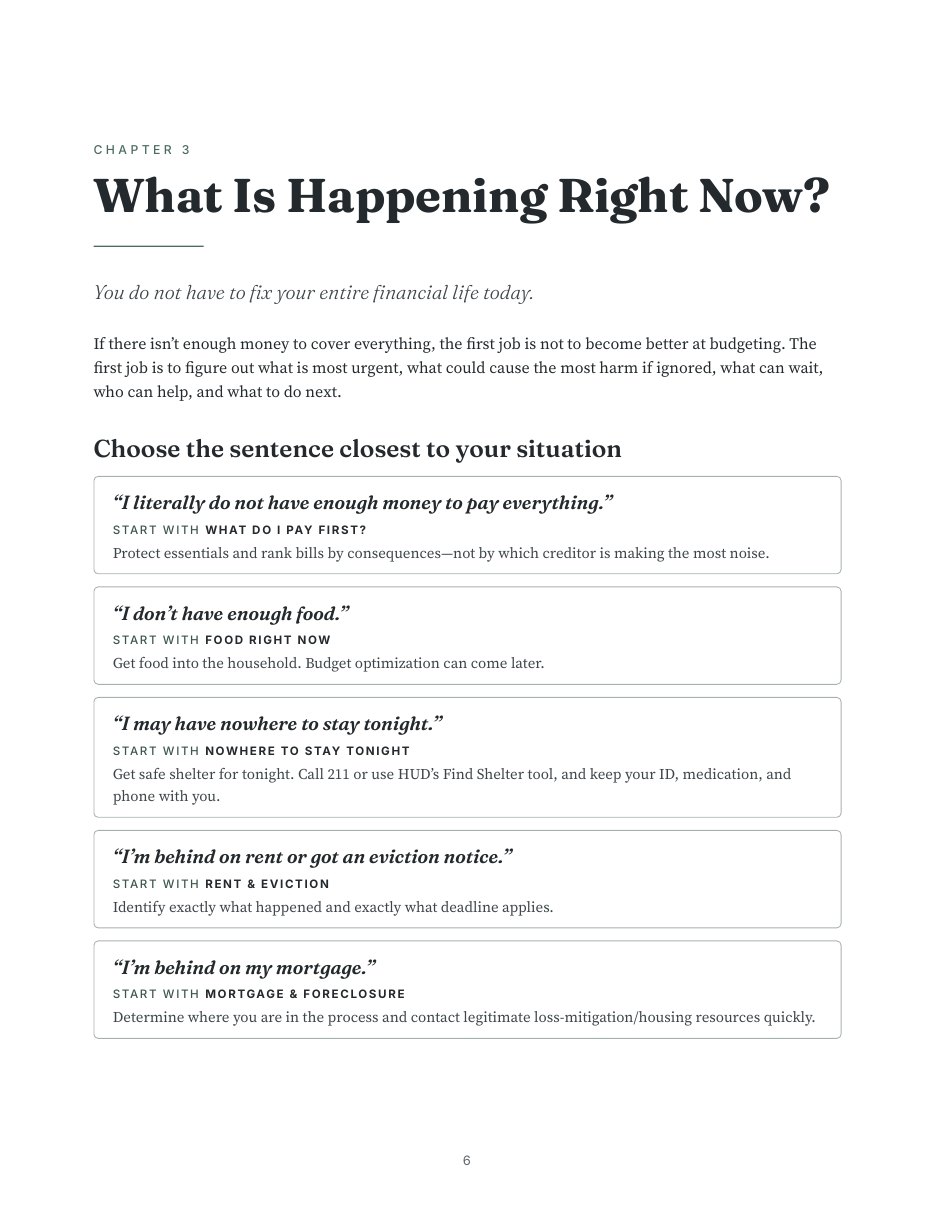
Instant download. Yours to keep.
Available on Etsy. Print what you need, or use it on your screen, and come back to it every time the money runs short.
Worksheet Pack
- Every worksheet from the workbook
- Triage list, call log, survival budget
- Crisis File checklist
Workbook + Worksheet Pack
- All 37 chapters and 8 parts
- Scripts, checklists, and pathways
- Separate pack for easy printing
The Workbook
- All 37 chapters and 8 parts
- Worksheets included in the book
- Clickable contents and links
Smaller tools, $5 each
For one specific job, or as a next step after the workbook.
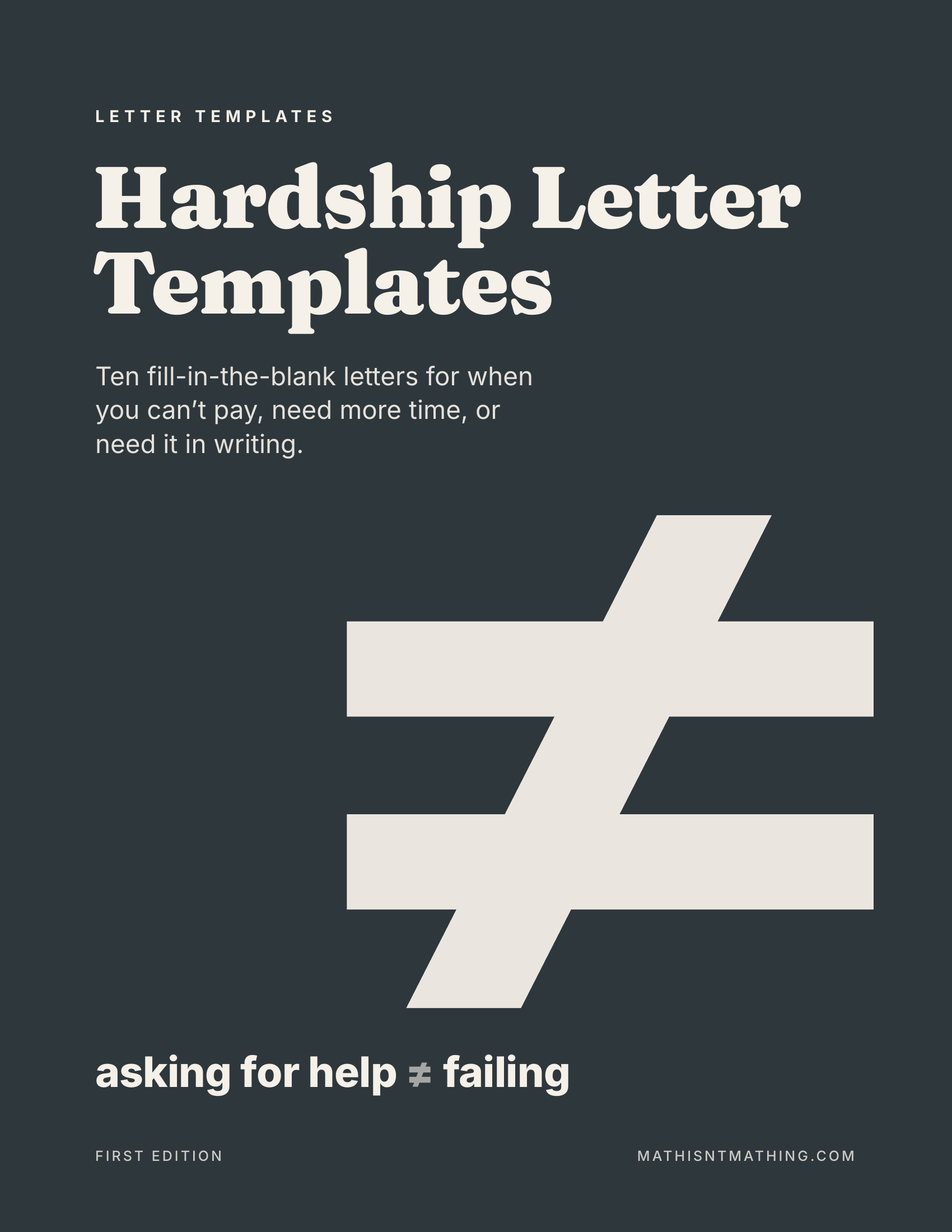
Hardship Letter Templates
Ten fill-in-the-blank letters for rent, medical bills, utilities, credit cards, and debt collectors. Editable Word file plus PDF.
Get the letters →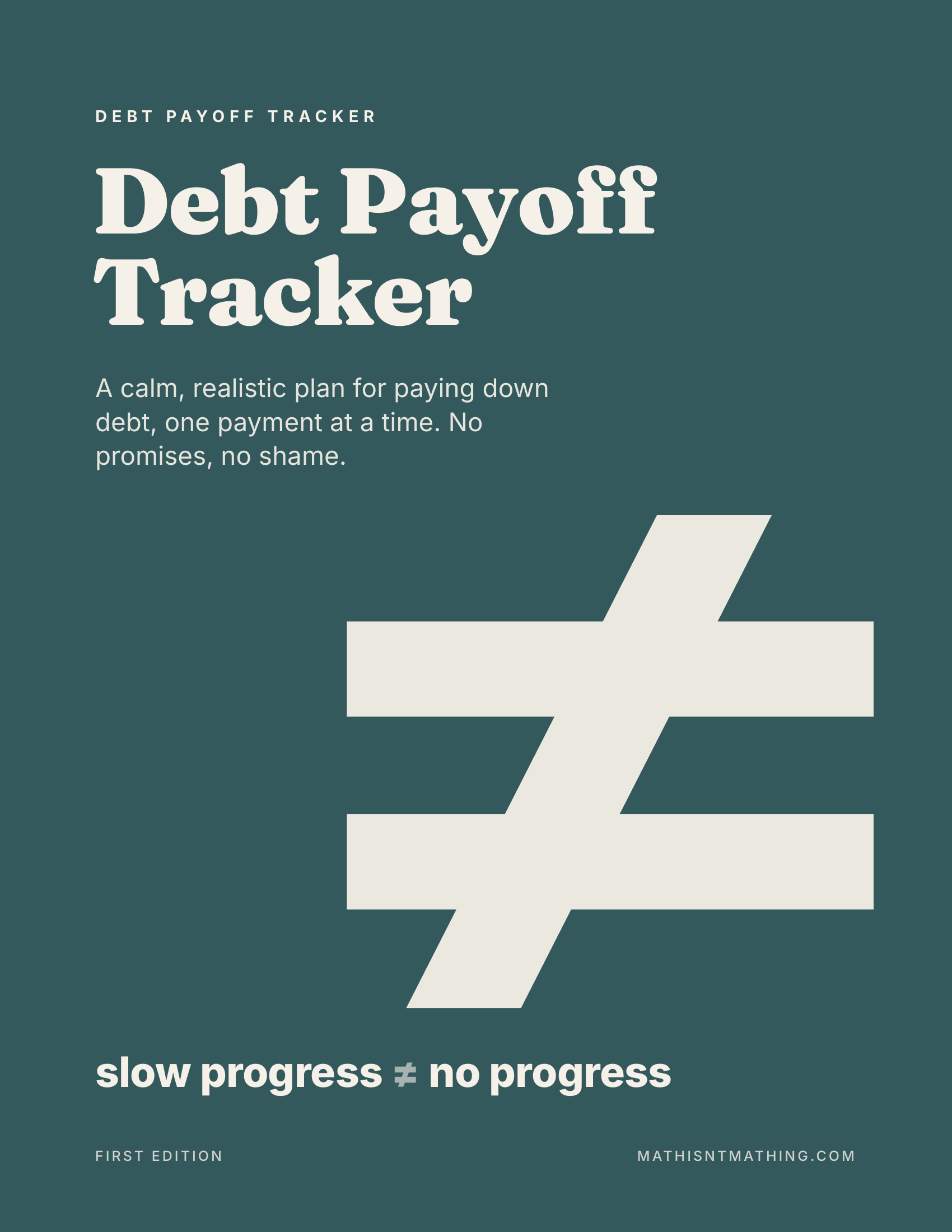
Debt Payoff Tracker
List every debt, choose snowball or avalanche, and color in your progress. No “debt-free by summer” promises.
Get the tracker →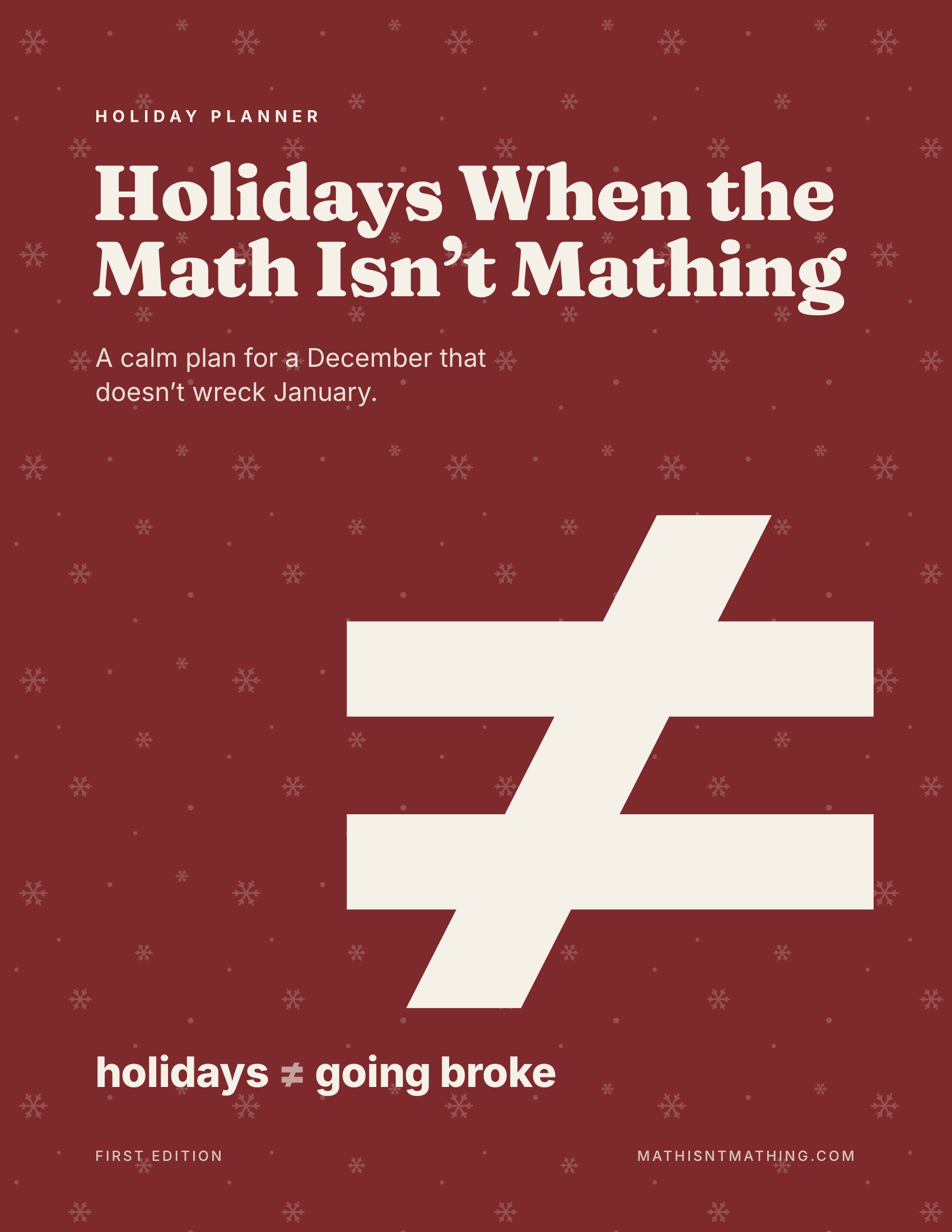
Holiday Planner
Set a real holiday number, protect the bills that can’t wait, and scale back without guilt.
Get the planner →If the price is the problem this month, start with the free triage tool, or ask for a free copy of the workbook.
Deciding which bill not to pay? Start here, free.
Get What Do I Pay First?, the 10-minute triage tool from the workbook. When there isn’t enough for every bill, it helps you rank them by consequence and find your one next step.
No email required. Print it, use it, share it with anyone who needs it.
Can’t afford the workbook right now? Ask for a free copy.
If buying it would mean skipping groceries or a bill this month, it shouldn’t be one more thing you have to go without. Every week I set aside free copies for people who need one. You don’t have to prove anything or explain anything.
- Email [email protected] with “Free copy” in the subject line.
- That’s it. I’ll send you the full workbook PDF.
Copies go out in the order requests arrive, usually within a few days. If this week’s copies are already spoken for, yours will come the next week. Your email address is used only to send the file. You won’t be added to any list.
Before you buy
Is this financial or legal advice?
No. It is educational information designed to help you understand your options, find resources, and ask better questions. Laws and programs vary by location and change over time, so the workbook tells you when to confirm a rule or get qualified help.
What format is it?
A PDF in US Letter size (8.5 x 11). It prints well on a home printer, and it works on a computer, tablet, or phone with clickable contents and links. The worksheet pack is a separate PDF so you can print only what you need.
Do I have to read the whole thing?
No. Start with What Is Happening Right Now?, choose the sentence closest to your situation, and go where it sends you.
How current is the information?
Program rules, phone numbers, websites, and dollar amounts change often, sometimes quickly, so the workbook is updated on an ongoing basis as things change. Each edition is dated, and the workbook points you to the official source for anything with a deadline or a dollar amount so you can confirm what applies to you today.
What if I make too much to qualify for help?
There is a whole chapter for that. Many resources are not income-tested, including hardship programs, hospital financial assistance, employer benefits, library services, and free community help.
Can I get a refund?
Because this is an instant digital download, sales are final. If a file is damaged or will not open, send a message through Etsy or email [email protected] and we will send a working replacement.
How was it made?
Written and designed by When the Math Isn’t Mathing. AI tools assisted with research, fact-checking, and layout.
If you are in danger right now, call 911. If you are thinking about suicide or feel overwhelmed, call or text 988. If you are unsafe at home, call the National Domestic Violence Hotline at 1-800-799-7233. For local help with food, shelter, or bills, call or text 211.